




Skål!

Aquavit is the national spirit of Norway and no trip to the country is complete without at least a taste of this flavoured spirit.
A bit of history
According to a letter dated 14th April 1531 and sent to Archbishop Olav Engelbrektsen in Trondheim, the first aquavit was made in Bergen, but the father of Norwegian aquavit is generally said to be an 18th century official from Hadeland named Christopher Blix Hammer. Despite being teetotal, Hammer believed that spirits were good for people in the winter, especially if they worked on the land. His aquavits were based on grain, but he also suggested potatoes as an alternative – a prescient idea as before long, potatoes had indeed replaced grain across the country.
In those days, hard liquor such as aquavit was regarded as medicine, used to help with everything from melancholy and asthma to pregnancy ailments, diabetes and Spanish flu. It was sold in pharmacies, even during the 1916-1926 prohibition years, and every Norwegian was allowed half a litre per consultation. (Consultations were limited to one every three days.) Farm animals were treated too, receiving 10-litre doses as often as needed, making prescribing a very lucrative business for the country’s doctors and vets. One doctor apparently wrote 48,000 liquor prescriptions in a year!
Fast forward to the 21st century and aquavit is so embedded in the culture that there are around 400 different aquavits available on the Norwegian market. The spirit is gaining popularity outside Scandinavia too as a new generation of mixologists discover the potential of this spirit.

How is it made?
Much like vodka, aquavit is a distilled spirit made from either grain or potatoes. While Danish and Swedish versions are generally made from grain, ‘Norwegian aquavit’ (which has had protected status since 1st March 2011) must be distilled from a minimum of 95% Norwegian potatoes.
After the distillation process, it is flavoured with herbs and spices. The main flavouring must be caraway or dill, with cardamom, cumin, anise, fennel, lemon and orange peel often used as secondary flavours. It is then aged in oak barrels for a minimum of six months to 12 months, depending on the size of the barrel. Most bottles of aquavit have a yellow/golden colour - typically, a darker colour suggests an older age or the use of young casks. The flavour is savoury and the effect is heady. (To be called aquavit it must be between 37.5% and 40% alcohol by volume.)

How to drink aquavit
Aquavit is an important part of drinking culture across Scandinavia, especially on special occasions such as Christmas, birthdays and weddings. It is most often drunk as an aperitif usually served at room temperature in tulip-shaped glasses. Before you drink, raise your glass, give a loud ‘Skål!’ and take a sip, remembering to look your fellow drinkers in the eye as you do so.
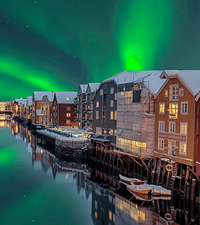
Our holiday to the Norway QuiltMeeting 2025 includes a special aquavit tasting in Trondheim. Skål!